
Osceola County Criminal Court Cases
Two trial courts divide the local criminal docket. The 77th District Court handles misdemeanors plus felony arraignments, probable-cause conferences, and preliminary examinations. If a felony survives that early stage, it is bound over to the 49th Circuit Court for trial-level proceedings. Both courts serve Osceola County from Reed City. There is no separate municipal court for Reed City, Evart, or Marion criminal filings.
The split matters because one prosecution can produce entries under two courts. District staff maintain the district file. The Osceola County Clerk is custodian of circuit filings and certified circuit documents. The Prosecuting Attorney makes charging decisions, but a prosecutor file is not the official court docket and may include protected investigative material.
The official 77th District Court page shows where the misdemeanor and early felony record begins.
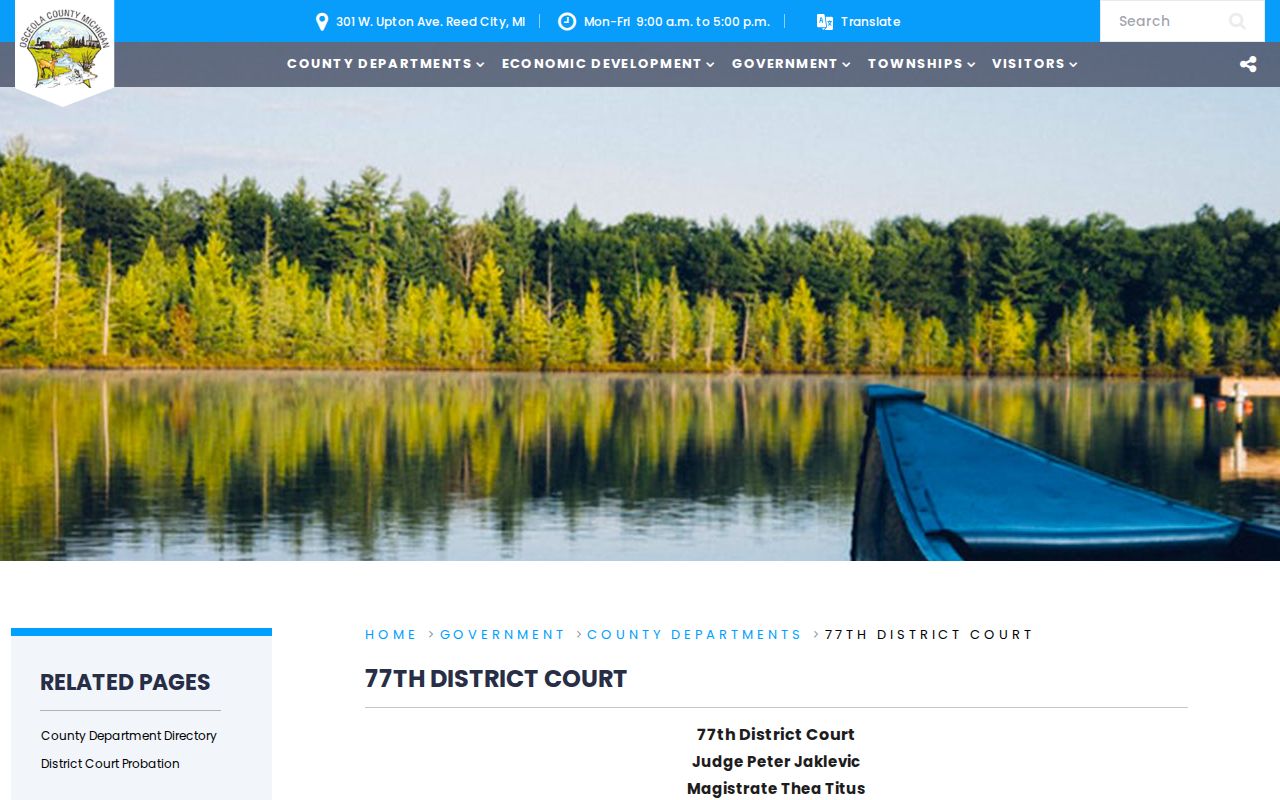
Use that court first when the charge level or felony bindover status is not yet known.
Search Osceola Cases in MiCOURT
MiCOURT Case Search is the main free public starting point. Court participation and available fields can vary, so choose the actual Osceola County court before entering a name or case number. A party-name search can find possible matches. A case number is safer because common names, spelling variants, and similar birth information can lead to the wrong file.
The MiCOURT interface shows the court-selection and search controls used for Osceola County criminal case records.
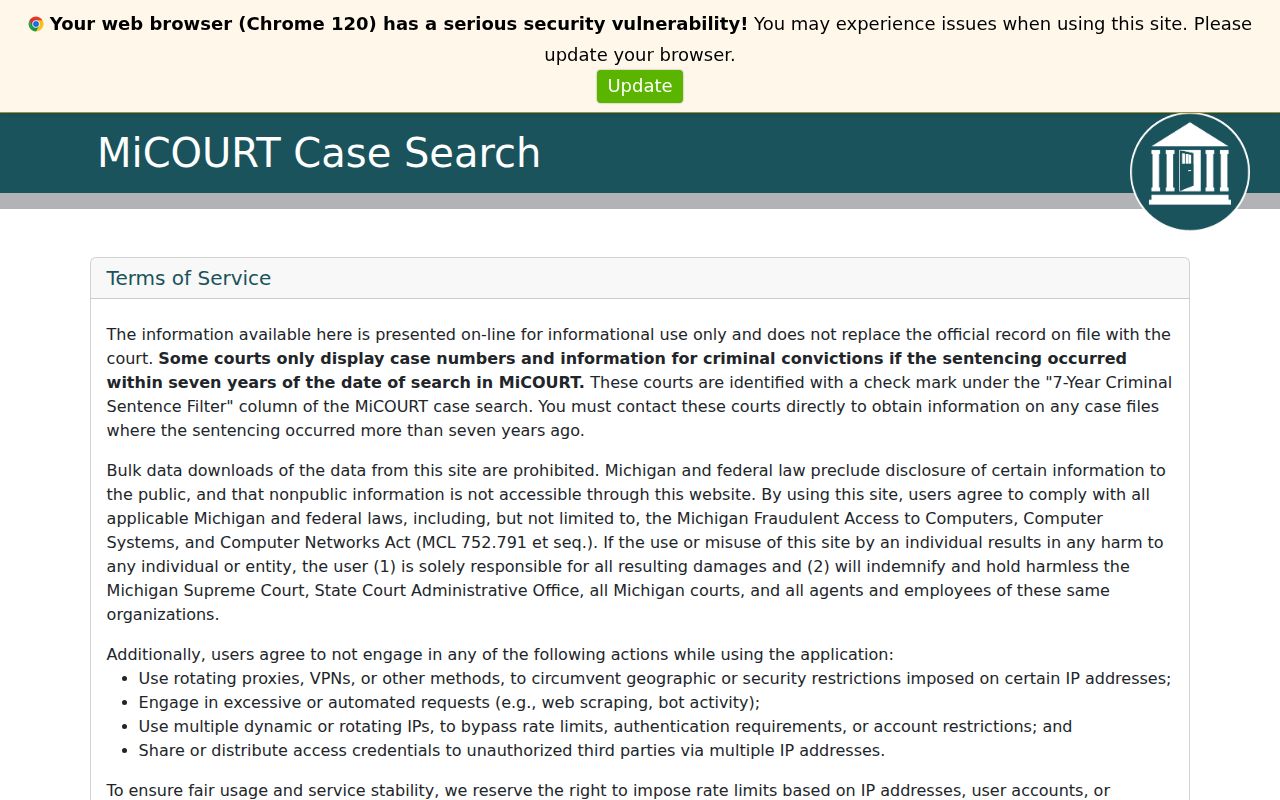
Public results are supplied by participating courts. The clerk remains the source of the official record when a field is unclear or a document is missing.
Searching Osceola County Case Records
Start broad enough to catch both stages, then narrow each result with details from the register of actions. The following method preserves the distinction between a match and a verified case.
- Open MiCOURT and select the 77th District Court for misdemeanors or early felony events. Also select the 49th Circuit Court when a felony may have been bound over.
- Use the displayed case-number mode when that identifier is known. Otherwise enter the party's first and last name with the spelling used at filing.
- Apply date of birth, filing year, or case-type filters when the selected court exposes them. Compare the county, court, charge, and filing date.
- Open the register of actions. Read the case status, original and amended counts, hearings, disposition, sentence, and any later warrant or probation entry.
- Contact the correct clerk for pleadings, orders, certified copies, or older Osceola County criminal court cases that are not downloadable.
| Field Label | Type | Required | Notes |
|---|---|---|---|
| Court selection | List/search | Yes | Select the participating district or circuit court. |
| Case Search / Name Search | Tabs or modes | One mode | Available controls can change by court. |
| Case Number | Text | Mode-dependent | Enter the format shown for the selected court. |
| Party First and Last Name | Text | Name mode | Last name is the core name field; matching behavior varies. |
| Date of Birth | Date/text | Optional | Use it to separate people with similar names when displayed. |
| Filing Date or Year | Filter | Optional | Narrows older Osceola County court cases. |
Osceola Felonies in 49th Circuit
The 49th Circuit Court serves both Osceola and Mecosta Counties. Its number alone does not prove that a result is an Osceola filing. Confirm the county, venue, case caption, and linked district events. A felony normally reaches circuit court after a preliminary examination or waiver in district court. The circuit file can then show the information, motions, plea or trial, judgment, and sentence.
The county's 49th Circuit Court source identifies the felony-level court used for Osceola County criminal court cases.
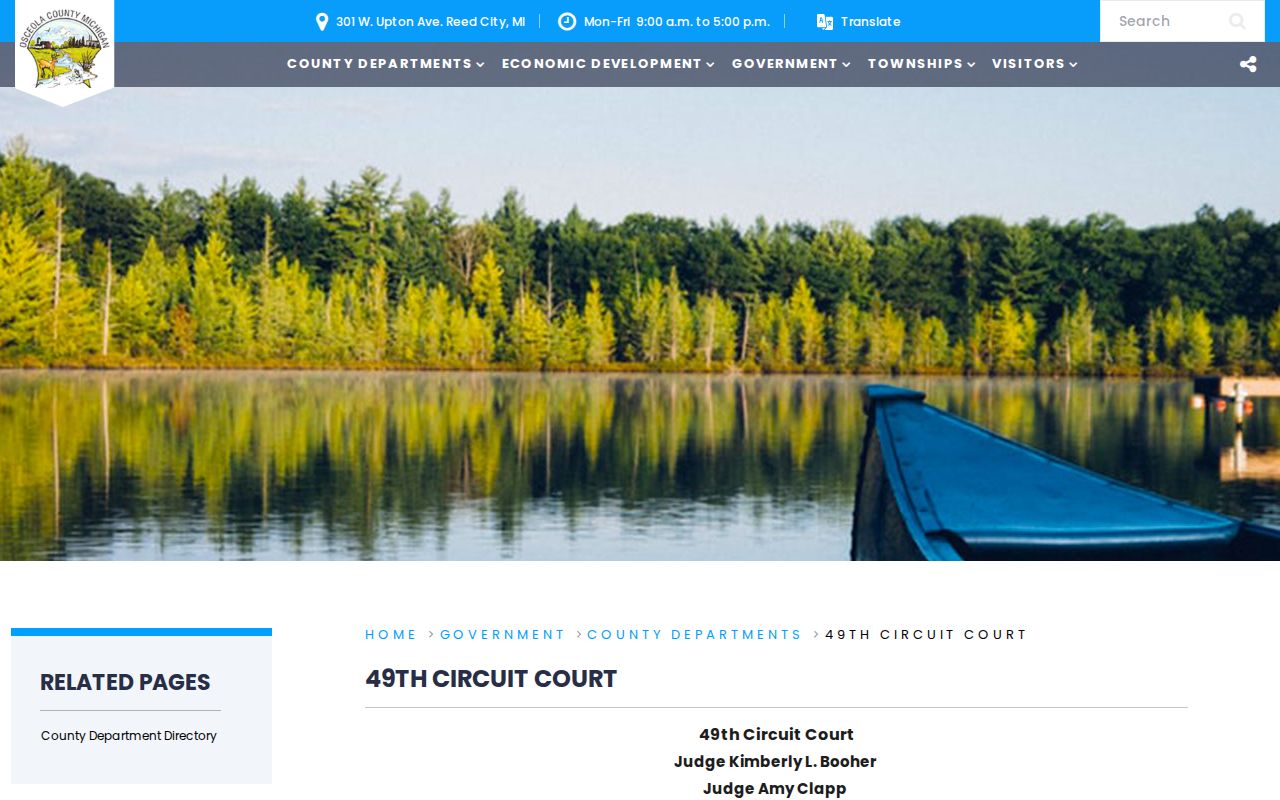
When the district docket ends with bindover, search the circuit court rather than assuming the case ended.
Note: A new circuit case number may represent the next stage of the same felony, not a second prosecution.
Inside an Osceola County Case File
A criminal case file records what the prosecution filed and what the court decided. Online docket metadata may be enough to establish the current status, but it does not always include the complaint, information, motion, order, or transcript. Focus first on the court and case number, then read the charge history and disposition together.
| Case Number & Court | Identifies the court, filing sequence, case type, and venue used to locate the official file. |
|---|---|
| Charging Document | The complaint or circuit information states the filed counts and statutory citations, which may differ from the arrest charge. |
| Docket Entries | The register of actions lists filings, appearances, motions, pleas, warrants, judgments, and later activity. |
| Hearing Dates | Entries can identify hearing type, date, time, judge, and courtroom when those fields are public. |
| Disposition & Judgment | Shows whether each count was dismissed, pleaded, tried, or resolved by another lawful outcome. |
| Sentence & Conditions | May show custody, probation, fines, costs, restitution, and later compliance entries where public. |
Financial fields may list assessments, fines, costs, restitution, and payment status where public. Attorney names and judge assignments may also appear. Treat each count separately because original and amended charges can have different outcomes. If the register says a document was filed but offers no download, use its title and date when asking the clerk for a copy.
Get Official Osceola Court Documents
When MiCOURT shows an entry without a document link, request the item from the clerk that holds it. Give the court, case number, document title, and filing date if known. Ask whether staff can accept the order by mail or phone, whether an uncertified copy meets the need, and whether identification is required. Current local copy and certification fees were not verified in the research, so request a quote before ordering.
The Osceola County Clerk page is the primary source for circuit-court record service.

District-case pleadings remain with the district clerk, while felony records after bindover belong in the circuit file.
Both offices operate through the county government and courts complex at 301 W. Upton Avenue, Reed City, MI 49677. General building hours are Monday through Friday, 9:00 a.m. to 5:00 p.m., but counter access and hearing schedules can differ. The County Clerk is on the first floor, the 49th Circuit Court is on the second floor, and the 77th District Court is on the lower level. Courtroom rules require devices to be turned off before entry, and photography needs authorization. Weapons, food, beverages, gum, tobacco, and newspapers are prohibited. Call ahead for an interpreter or disability accommodation.
How a Criminal Case Moves
The court record changes at each step. A misdemeanor stays in district court through disposition. A felony begins there, then transfers only after bindover. Charges may be amended, reduced, added, or dismissed, so an early count should never be read as the final result.
Case flow: Charges Filed › Arraignment › Pretrial › Plea or Trial › Disposition › Sentencing
The Osceola County Prosecuting Attorney reviews charges and represents the state. That office's public page provides useful prosecution context.

The judicial outcome still comes from the docket and signed court orders, not from an allegation or agency summary.
Read Osceola Docket Terms Carefully
A register of actions is a timeline, not a one-line verdict. “Open” means there is no final disposition yet. “Dismissed” means a count did not end in conviction, while a plea or guilty verdict supplies the finding that supports judgment. A warrant entry can document an event in the case, but MiCOURT is not marketed as a live warrant-clearance system.
- Arraignment
- The hearing where the charge is stated and the court addresses plea and release conditions.
- Probable-cause conference
- A district-court felony stage used to address evidence, scheduling, and possible resolution before examination.
- Preliminary examination
- The hearing used to decide whether probable cause supports sending a felony to circuit court.
- Bindover
- The transfer of a felony from the 77th District Court to the 49th Circuit Court.
- Disposition
- The result for a charge, such as dismissal, plea, acquittal, or conviction after trial.
Read the newest entry as part of the full sequence. A warrant may later be recalled, a sentence amended, or a qualifying conviction set aside. The signed order controls when a shorthand status label and later docket activity seem inconsistent.
Federal Cases Outside Osceola MiCOURT
Federal charges from Osceola County fall within the U.S. District Court for the Western District of Michigan. They do not appear as local prosecutions in MiCOURT. PACER provides federal dockets and filed documents after registration. Published pricing is ten cents per page, with a three-dollar cap for most documents and a quarterly waiver when charges total thirty dollars or less. Some reports, name searches, transcripts, and sealed material follow different rules.
The PACER source shows the separate federal docket channel.
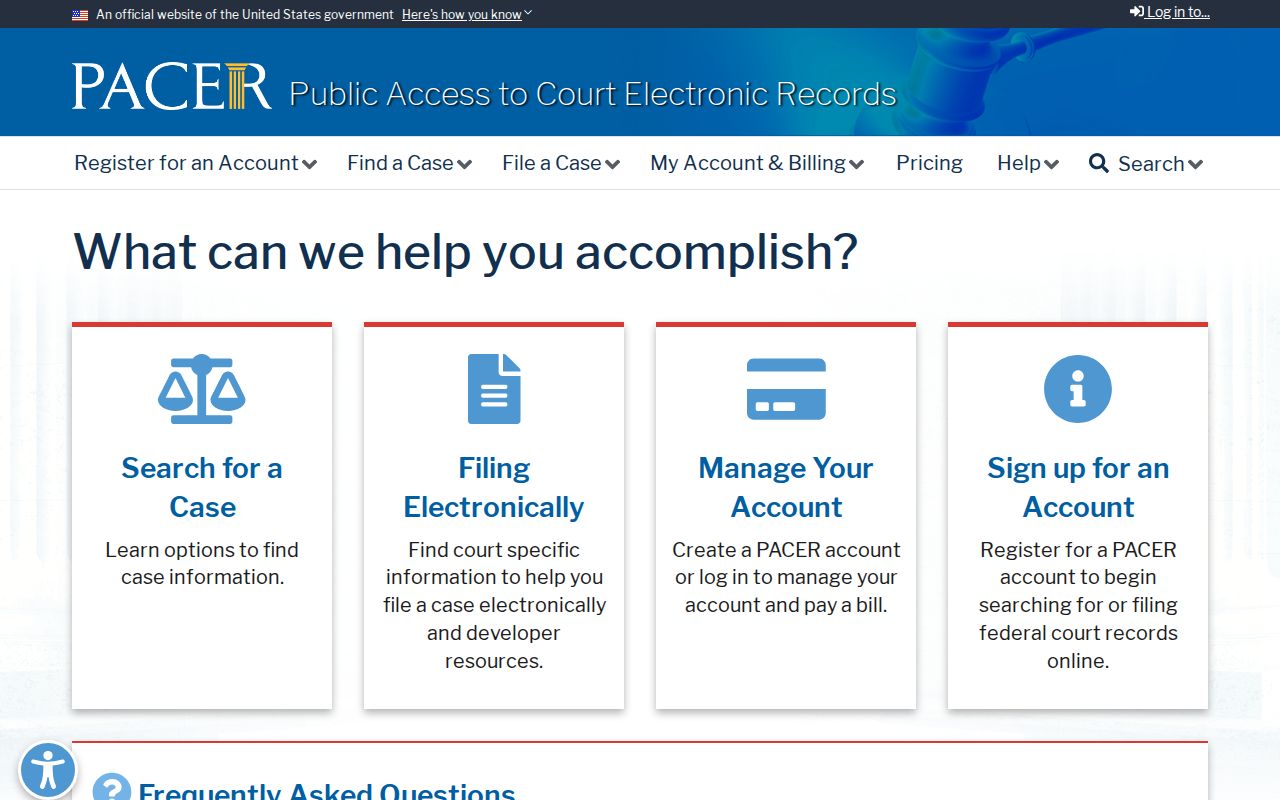
Use the Western District of Michigan clerk for the official federal record and current access terms.
Case Record Access & Restrictions
Michigan court dockets are governed by judiciary access rules and clerk procedures. Executive-agency FOIA is not a substitute for a court-file request. Public views may omit juvenile matters, sealed or set-aside cases, victim information, personal identifiers, and documents made nonpublic by law or order. A missing online result therefore does not prove that no Osceola County criminal court case ever existed. The Michigan judiciary also publishes self-represented litigant resources for forms and court-process routing.
Older cases also require a different approach. An Archives of Michigan account reports preserved Osceola court material dating to 1869, far beyond modern online coverage. For historical or genealogy research, contact the clerk and ask about archived indexes instead of relying only on MiCOURT.
A public screen print and an official certified copy serve different purposes. A screen print can help track hearings or compare charges, but it may lack the clerk's certification and the full text of an order. When proof of the final Osceola County court outcome is needed for personal record correction or set-aside work, ask for the signed disposition and confirm whether certification is necessary. Never infer a final outcome from the last visible hearing line.
Note: Verify consequential findings with the originating court because online records can lag later corrections, set-asides, and signed orders.